You probably think of snoring as a sleep problem or a relationship problem, something to bring up with a doctor or a frustrated spouse. What most people never consider is that a dentist might notice the warning signs first. At All Smiles Dental in Burley, Dr. Spencer Rice often sees clues during a routine cleaning that point to something happening overnight, long before anyone has connected the dots between a restless night and what is showing up on the teeth.
The mouth is where a lot of sleep-disordered breathing leaves its fingerprints. That makes a dental exam one of the more useful early screenings you can get, even if you came in expecting nothing more than a check for cavities.
Why your mouth tells the story
Obstructive sleep apnea happens when the soft tissue at the back of the throat collapses during sleep and blocks the airway. Breathing stops, the body panics a little, and you wake just enough to gasp it back open. This can repeat dozens or even hundreds of times a night. Snoring is the sound of air forcing its way through a narrowed passage, and while not every snorer has apnea, loud and chronic snoring is one of its most common signals.
Here is where teeth come in. When the airway narrows, the brain sometimes responds by triggering the jaw to clench and grind, a reflex that helps reopen the passage. That nighttime grinding, called bruxism, wears down enamel in patterns a trained eye recognizes immediately. Flattened molars, tiny fractures, worn edges on the front teeth, and increased sensitivity all show up on the surface while the real trouble is happening in the throat.
Signs Dr. Rice looks for at All Smiles Dental
A dentist is in a strange but valuable position. You see your physician once a year if you are diligent, but you visit the dentist every six months and someone is looking directly into your mouth. Over time, patterns emerge.
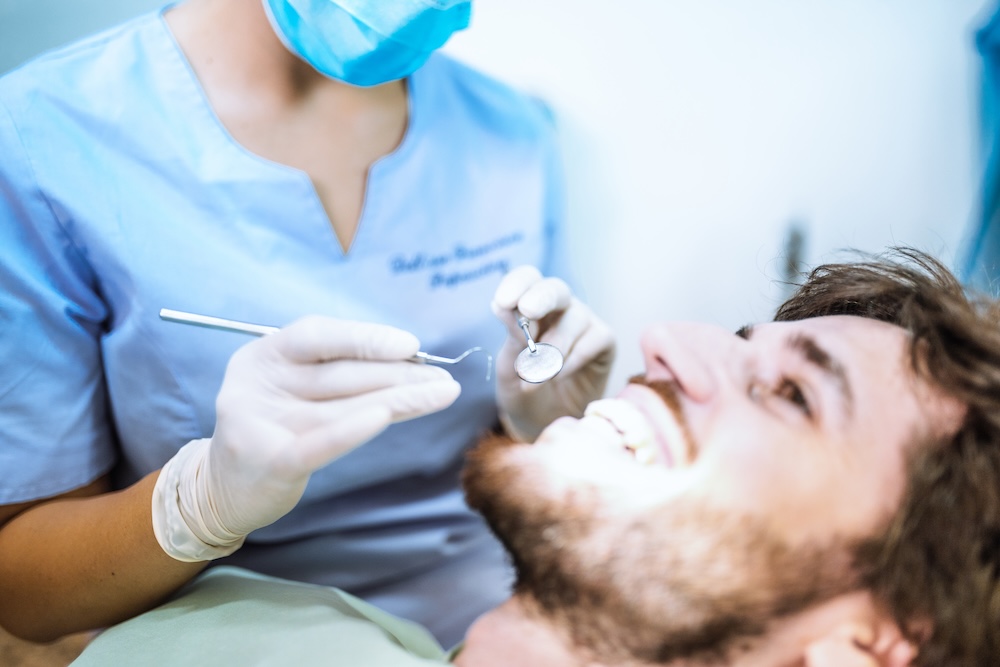
During an exam, a few findings tend to raise a flag:
- Worn, flattened, or chipped teeth from grinding
- A scalloped or heavily indented tongue, which suggests it is pressing against the teeth to keep the airway open
- Redness in the throat or an enlarged uvula from the vibration of snoring
- Dry mouth, since mouth breathing during apnea dries out saliva and raises cavity risk
- A history of jaw soreness or morning headaches
None of these prove sleep apnea on their own. Taken together, though, they tell a story worth investigating. Dr. Rice can talk through what he is seeing and, when it makes sense, suggest a conversation with your physician or a referral for a sleep study, which is the only way to get a formal diagnosis.
The cost of leaving it alone
Untreated sleep apnea is not just about feeling groggy. It is tied to high blood pressure, heart disease, type 2 diabetes, and a higher risk of stroke. On the dental side, years of grinding can crack teeth, damage existing crowns or fillings, and lead to costly restorative work. The dry mouth that comes with chronic mouth breathing speeds up tooth decay and gum problems.
Catching the pattern early changes the math. Address the grinding and the breathing, and you protect both your teeth and the rest of your body.
What treatment can look like
For some patients, the answer lives with a sleep physician and a CPAP machine. For others, especially those with mild to moderate apnea or those who cannot tolerate CPAP, a custom oral appliance fitted by a dentist offers real relief. These devices gently reposition the lower jaw to keep the airway open through the night. They are quiet, portable, and far easier to travel with than a machine.
If grinding is the main concern, a properly fitted night guard protects the enamel while you and your doctor sort out the bigger picture. The keyword is properly fitted. A drugstore guard rarely accounts for how your bite actually works, and a poor fit can make clenching worse.
A practical first step is simple awareness. Ask whoever shares your home whether you snore, whether your breathing seems to pause, and whether you wake up gasping. Note morning headaches, jaw tightness, or daytime exhaustion that good sleep should have fixed. Bring those notes to your next visit.
For deeper reading on diagnosis and the health risks involved, the American Academy of Sleep Medicine and the American Dental Association both publish clear, trustworthy patient resources.
Bring your sleep questions to All Smiles Dental
Snoring and worn teeth rarely travel alone, and the connection between sleep apnea, snoring, and your dental health deserves more than a shrug. If your mornings start with a sore jaw or your partner has been nudging you about the noise, the team at All Smiles Dental can take a closer look and help you decide on a sensible next step. Schedule a visit, and let us check for the signs that often hide in plain sight.