
Gum disease is a bacterial infection of the tissue and bone that hold your teeth in place, and it is far more common than most people assume. At All Smiles Dental in Burley, it shows up in patients of every age, from teenagers with braces to grandparents who have never had a cavity. It rarely hurts until the damage is done, which is why gum health belongs in a routine cleaning, not an emergency visit.
What is gum disease, and how common is it?
Gum disease, or periodontal disease, happens when bacteria in plaque irritate the gums and, over time, break down the ligament and bone anchoring each tooth. According to the Centers for Disease Control and Prevention, 47.2% of adults age 30 and older have some form of periodontal disease, rising to roughly 70% among adults 65 and older. It is also the leading cause of adult tooth loss, which surprises people who assume cavities take that title.
Gingivitis or periodontitis: what is the difference?
Gingivitis is inflammation limited to the gum tissue. Bleeding when you floss, puffy edges, a pink tinge in the sink. Nothing is lost yet, and with consistent brushing and flossing most cases calm down within two to three weeks.
Periodontitis is the next stage. Bone and attachment have been destroyed, pockets form between tooth and gum, and the damage does not reverse on its own. Treatment can halt the progression, but lost bone does not grow back on better habits alone.
What are the warning signs I should watch for?
The signs are quiet, which is the problem. Watch for:
- Gums that bleed when brushing or flossing
- Persistent bad breath or a bad taste that returns after brushing
- Gums pulling back so teeth look longer than they used to
- Teeth that feel loose, or a bite that suddenly feels different
- Sensitivity along the gum line, especially to cold
Bleeding is the one people dismiss. Healthy gums do not bleed when you clean them, the same way healthy skin does not bleed when you wash it.
How is gum disease diagnosed at All Smiles Dental?
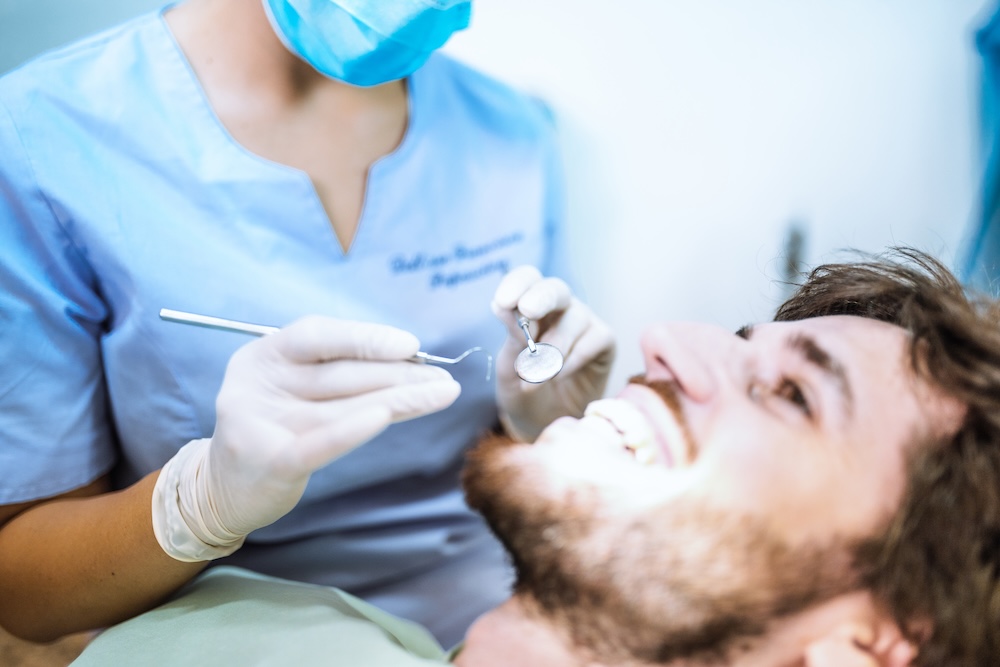
Diagnosis relies on measurement, not guesswork. A small probe measures the space between gum and tooth at six points around every tooth, and those numbers go in your chart to be tracked over time. They read like this:
- 1 to 3 millimeters with no bleeding: healthy
- 4 millimeters: early attachment loss, worth watching closely
- 5 to 6 millimeters: moderate periodontitis
- 7 millimeters or deeper: advanced disease
X-rays fill in the rest by showing bone levels a probe cannot reach. Comparing this year’s readings against last year’s is what tells us whether a problem is stable or moving.
What does treatment actually involve?
Gingivitis usually clears with a standard cleaning and a tightened home routine. Periodontitis calls for scaling and root planing, a deep cleaning that removes hardened deposits from root surfaces below the gum line. It is done in halves or quadrants with the area numbed, so most patients need two visits.
Nationally, scaling and root planing commonly runs $200 to $400 per quadrant, and many dental plans cover a meaningful portion. Coverage varies enough that it is worth having a benefits estimate run first.
The recall interval changes afterward. Instead of every six months, patients with a periodontal history move to three or four month maintenance, because bacteria repopulate deeper pockets faster than a standard schedule keeps up with. Advanced cases may be referred to a periodontist.
Can gum disease affect the rest of my health?
Yes, and the strongest evidence involves diabetes and pregnancy. The relationship with diabetes runs both directions: high blood sugar makes gum infection worse, and active infection makes blood sugar harder to control. The American Academy of Periodontology treats periodontal care as part of diabetes management for that reason.
During pregnancy, hormonal changes make gums more reactive, and research has linked periodontitis to preterm birth and low birth weight. Cleanings are safe while pregnant, and the second trimester is usually the most comfortable window.
What should Burley families be doing at home?
Two minutes of brushing twice a day and flossing once a day covers most of it. Look for the ADA Seal of Acceptance on products, since that seal means the manufacturer submitted evidence rather than marketing copy.
A few risks are worth naming for life around Cassia County. Smokeless tobacco drives recession right where the pouch sits. Dry mouth from blood pressure medication, antidepressants, or antihistamines cuts the saliva that rinses bacteria away. Anyone sipping sports drinks through a long shift keeps their gums bathed in sugar for hours.
Kids are not exempt. Puberty raises gum sensitivity and brackets give plaque more places to hide, so a water flosser earns its keep during braces years.
Gum disease is manageable, caught early and stubborn when it is not, and the difference comes down to whether anyone was measuring. If it has been more than a year since anyone charted your gum readings, schedule an exam with All Smiles Dental and find out where you stand.