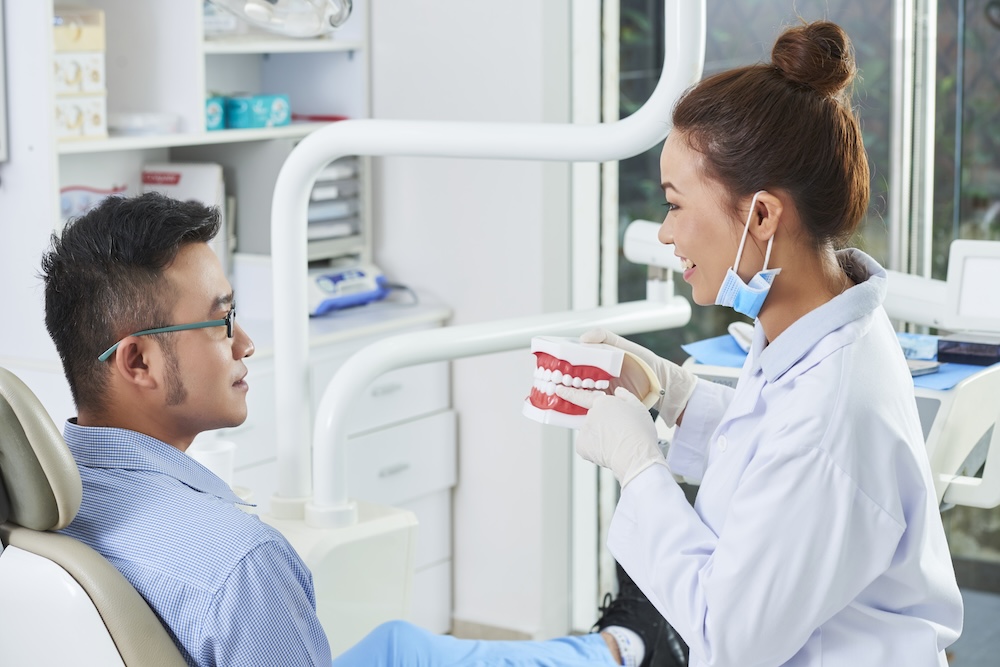
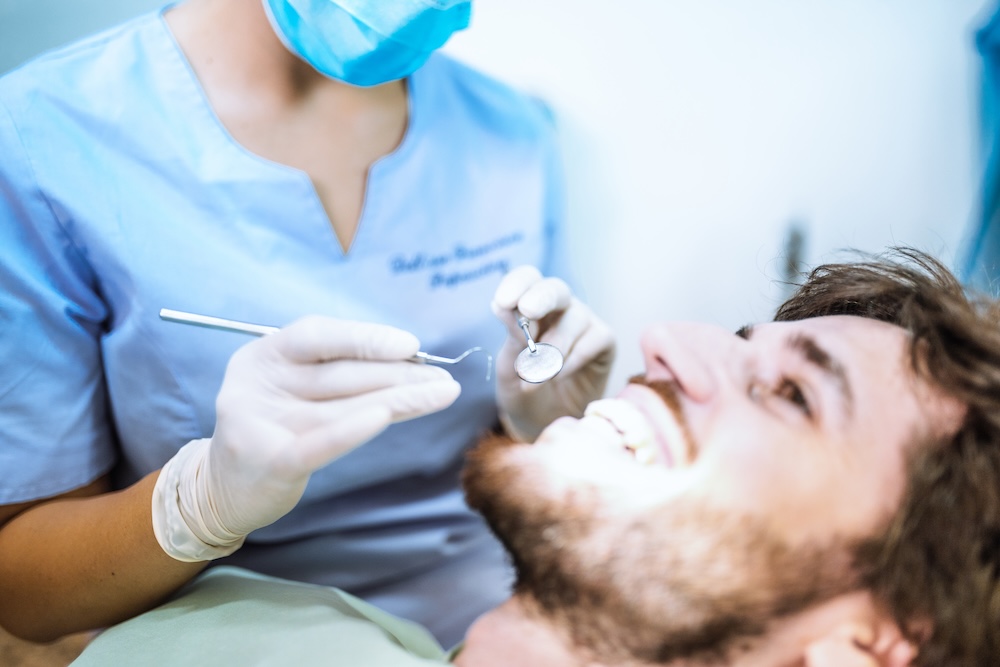
Most first visits to a new dentist take about an hour, and much of that time goes to a careful exam, a few X-rays, and a professional cleaning. At All Smiles Dental in Burley, Dr. Spencer Rice and his team explain each step before it happens.
Whether it has been six months or six years since your last cleaning, the appointment follows a predictable order. Here is how it usually goes.
What should you bring to your first dental appointment?
Bring a photo ID, your dental insurance card if you have coverage, and a list of the medications and supplements you take. Blood thinners and some bone-density drugs, for example, can change how a dentist approaches extractions and other procedures.
Plan to arrive 10 to 15 minutes early to finish new patient forms. If another office took X-rays of your teeth in the last year, ask them to send copies ahead of time so you can skip a repeat set.
Many dental plans cover preventive care (exams, cleanings, and routine X-rays) at or near 100 percent, usually twice a year, though plans vary. Our front desk can check your benefits before you come in.
What happens when you check in at All Smiles Dental?
Check-in is mostly a review of your health history. A team member will go over your forms and ask about allergies, recent surgeries, heart conditions, and pregnancy, since each can change what is safe for you in the chair.
A small group of patients, mainly those with certain heart conditions such as an artificial heart valve, may need an antibiotic before dental work. That recommendation comes from the American Heart Association.
If a past visit went badly, say so here. The staff can slow down, explain more as they go, and talk with you about sedation options.
What does the dental exam include?
The exam is a check of your teeth, gums, bite, and soft tissues, supported by X-rays when they are due. Dr. Rice looks at each tooth, checks existing fillings and crowns for wear, and does an oral cancer screening, a quick look and feel along the tongue, cheeks, throat, and neck.
How often do you need dental X-rays?
It depends on your risk of cavities. Bitewing X-rays, the small images taken while you bite on a tab, show decay between teeth that can’t be seen in the mirror. Guidance from the American Dental Association (ADA) and the FDA suggests adults with no recent cavities may need them only every 24 to 36 months, while patients with frequent decay may need them every 6 to 18 months. Digital X-rays use a very low dose of radiation.
What do the gum measurements mean?
The hygienist slides a thin probe along each tooth to measure the pocket between tooth and gum. Healthy pockets are 1 to 3 millimeters deep. Readings of 4 millimeters or more, especially with bleeding, can be an early sign of periodontal disease, an infection of the gums and supporting bone.
What happens during a dental cleaning?
A professional cleaning removes plaque and tartar, the hardened buildup a toothbrush cannot take off. The hygienist works along and just under the gumline with hand scalers or an ultrasonic scaler, which vibrates and sprays water, then polishes and flosses.
Most people feel pressure and scraping rather than pain. Inflamed gums may bleed a little, and that usually settles within a day or two.
If your gum measurements showed deeper pockets, a regular cleaning may not reach the problem. A deep cleaning, called scaling and root planing, is usually scheduled as a separate visit.
What happens after the exam and cleaning?
Before you leave, Dr. Rice will show you your X-rays, explain what he found, and sort what needs attention now from what can wait. Catching problems early keeps treatment small. A cavity found today might need only a tooth-colored composite filling, while the same decay left for a year or two can reach the nerve and call for a root canal and crown.
If you need treatment, ask for a written estimate showing your expected insurance coverage. Booking your next cleaning at checkout is the simplest way to stay on track.
How often should you see the dentist, and when should kids start?
Most patients do well with a checkup every six months, but the ADA recommends that your dentist set the interval based on your own health. People treated for gum disease often return every three to four months.
For children, the American Academy of Pediatric Dentistry recommends a first visit by the first birthday or within six months of the first tooth coming in. These early appointments are short. A toddler may sit on a parent’s lap while the dentist counts teeth and looks for early decay.
Ready to schedule a visit at All Smiles Dental?
A routine dental appointment comes down to a health review, an exam with X-rays when they are due, and a cleaning, followed by a plain conversation about what comes next. Knowing that order ahead of time takes much of the worry out of it.
If you live in Burley, Rupert, or anywhere in the Mini-Cassia area, All Smiles Dental is at 515 E 5th St N. You can request an appointment through the schedule page on our website. If you are nervous or unsure about your coverage, mention it when you book, and we will plan around it.