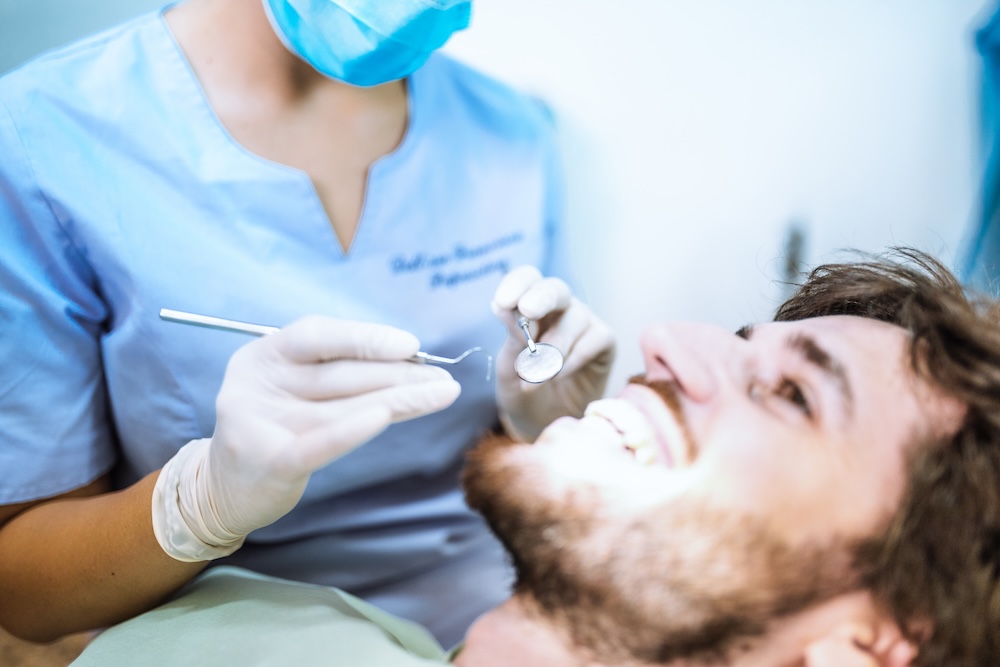

A twinge when you sip iced tea. A dark spot on a back tooth you only notice in the bathroom mirror. Most people wonder at some point whether they have a cavity. At All Smiles Dental in Burley, Dr. Spencer Rice and our team find and treat cavities every week, in patients of every age. The hard part is that small cavities usually cause no symptoms at all. This guide covers the signs worth paying attention to, what happens at each stage of decay, and what to do next.
What is a cavity, and how common are they?
A cavity is a hole in a tooth caused by decay. Bacteria in plaque feed on sugars and starches and produce acid. Over time, that acid dissolves enamel, the hard outer layer of the tooth, and then works into the softer dentin underneath.
Cavities are one of the most common health problems in the country. The CDC’s 2024 Oral Health Surveillance Report found that about 1 in 5 adults aged 20 to 64 has at least one untreated cavity, along with about 11 percent of children aged 2 to 5.
What are the signs you might have a cavity?
The most common signs are sensitivity to sweets or temperature, pain when you bite down, and visible spots or holes on a tooth. Early decay often has no symptoms, so by the time you notice something, the cavity has usually reached the dentin.
Watch for:
- A short, sharp twinge when you eat something sweet, cold, or hot
- Pain when you bite down on one particular tooth
- Chalky white spots, or brown or black stains that don’t brush off
- A hole or rough edge you can feel with your tongue
- Food that keeps catching between the same two teeth
- A toothache that throbs or wakes you up at night
That last sign is different from the others. Lingering pain after the hot or cold is gone, or pain that starts on its own, often means decay has reached the pulp, the nerve and blood supply inside the tooth.
Why can’t you always see a cavity?
Many cavities start between teeth or under old fillings, where you can’t see them in a mirror. Dentists find these with bitewing X-rays, small images that show the spaces between back teeth. A cavity can look like a dark shadow on an X-ray long before it hurts.
Can a cavity heal on its own?
Only at the very earliest stage. When acid first pulls minerals out of enamel, it leaves a chalky white spot. At that point the enamel hasn’t broken down yet, and fluoride from toothpaste, varnish, or prescription paste can help the surface remineralize, or rebuild its mineral content.
Once the enamel breaks and a true hole forms, the tooth can’t regrow it. Decay in dentin also spreads faster than decay in enamel, because dentin is softer. Waiting usually means a bigger repair later.
How does All Smiles Dental treat a cavity?
Treatment depends on how far the decay has gone. Dr. Rice checks the tooth visually, takes X-rays when needed, and explains what he finds before recommending anything.
| Stage of decay | What’s happening | Typical treatment |
| White spot | Enamel losing minerals, no hole yet | Fluoride varnish and closer monitoring |
| Small to moderate cavity | Hole through enamel into dentin | Tooth-colored composite filling |
| Large cavity | Too much of the tooth lost to hold a filling | Crown |
| Decay into the pulp | Nerve inflamed or infected | Root canal, usually followed by a crown |
| Tooth can’t be saved | Extensive decay or fracture | Extraction, with options to replace the tooth |
Most small fillings are done in one visit with local anesthetic, and you can eat once the numbness wears off. [CLIENT INPUT: describe the no-injection option for children’s cavities mentioned in patient reviews, and any sedation options Dr. Rice offers for anxious patients.]
What should you do if you think you have a cavity?
Call your dentist and schedule an exam. Mild sensitivity can wait a few days for an appointment. Until then:
- Brush gently with a fluoride toothpaste and floss around the sore tooth.
- Rinse with warm salt water if the gum nearby is irritated.
- Avoid very sweet, sticky, hot, or cold foods on that side.
- Use an over-the-counter pain reliever as directed on the label if you need it.
These steps ease discomfort but don’t stop the decay. Some signs need faster attention. Facial swelling, a pimple-like bump on the gum, a bad taste that won’t go away, or fever with tooth pain can point to an abscess, a pocket of infection at the root. Call the office the same day. If swelling affects your breathing or swallowing, go to an emergency room.
How can you lower your chances of getting another cavity?
Fluoride, cleaning between teeth, and how often you snack matter more than any single product. The American Dental Association recommends brushing twice a day for two minutes with fluoride toothpaste and cleaning between your teeth once a day. Sipping soda, sports drinks, or sweetened coffee over several hours keeps teeth in an acid bath longer than having the same drink with a meal. For children, sealants on the chewing surfaces of back molars block one of the most common places for cavities to start. Regular checkups let us catch white spots while they can still be reversed.
Think you have a cavity? Schedule an exam in Burley
Sensitivity, pain when biting, and new spots on a tooth are all worth a look, and many cavities show up only on X-rays. Caught early, most are fixed with a single tooth-colored filling. If something feels off, or it has been more than six months since your last checkup, schedule a visit with Dr. Rice at All Smiles Dental. We serve families in Burley, Twin Falls, and the surrounding Magic Valley communities.